
The uncomfortable question after an AI agent incident is rarely, “Did the dashboard show activity?” It is usually much more basic: “Can we reconstruct what actually happened?”
An agent read something. It trusted something. It called a tool. It maybe used memory from last week. It produced a recommendation, edited a file, sent a message, opened a ticket, queried a database, or triggered another workflow. By the time the incident review starts, the team may have a chat transcript, some application logs, and a vague sense that the model “went off course.” That is not enough.
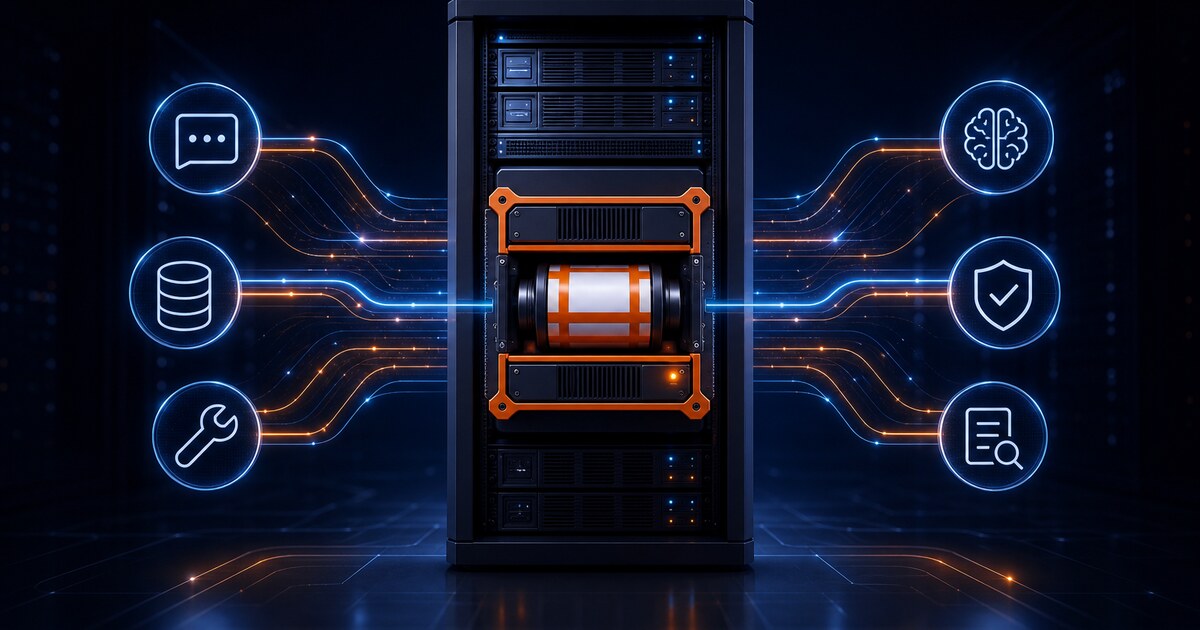
Enterprise agents need a black box recorder: a structured, reviewable record of the execution path. Not a vanity dashboard. Not only a transcript. Not just a list of API calls. A real recorder connects instructions, evidence, tool calls, policy decisions, memory reads and writes, boundary crossings, and final actions into one incident-grade timeline.
The reason is simple: agents are not only generating text anymore. They are execution systems.
A recent paper, “From Agent Traces to Trust: Evidence Tracing and Execution Provenance in LLM Agents,” frames this clearly. Once agents retrieve documents, call tools, update memory, observe environments, and coordinate with other agents, final-answer accuracy is no longer a sufficient trust signal. Two agents can produce the same answer while taking very different paths. One may have used a trusted source and a safe tool call. The other may have relied on poisoned context, stale memory, or an unnecessary privileged action.
That difference matters more than the answer.
A transcript can tell you what the agent said. It often cannot tell you which retrieved passage supported a claim, whether a tool argument was derived from trusted data, whether memory quietly changed the plan, or where a multi-step failure started. Evidence tracing and execution provenance are the missing layer: they link claims, data, actions, and outcomes so the organization can debug and govern the process, not just grade the final sentence.
This becomes especially important because agent risk is path-dependent. “Runtime Governance for AI Agents: Policies on Paths” makes the point with a practical example: a database read may be allowed, and an email may be allowed, but a database read followed by an external email may be an exfiltration event. Looking at each step in isolation misses the violation. The sequence is the security object.
That is where many current AI dashboards fall short. They can show usage volume, number of users, model spend, prompt counts, and maybe which tools were invoked. Those are useful operational metrics. But they do not answer the incident questions that matter:
- Who or what initiated the task?
- What instructions entered the context?
- Which retrieved data was trusted, untrusted, stale, or user-supplied?
- Which claim depended on which evidence?
- Which tool was called with which arguments?
- What policy decision allowed or blocked the next step?
- What memory was read or written?
- Which boundary crossing changed the risk of the run?
- What control would have changed the path?
If those questions cannot be answered, the team is not operating an agent. It is operating a mystery box with logs around it.
A better mental model comes from the “Authenticated Workflows” paper, which treats agentic AI as a systems problem rather than a prompt problem. It identifies four control surfaces: prompts, tools, data, and context. Those are exactly the surfaces a black box recorder should watch.
Prompt crossings record instructions entering the system, including system prompts, user requests, delegated tasks, and retrieved instructions embedded in documents or web pages. Tool crossings record privileged operations: database queries, file edits, code execution, emails, tickets, API calls, browser actions, and repository operations. Data crossings record what external content entered the agent’s reasoning and whether it was trusted, user-supplied, public, internal, sensitive, or derived. Context crossings record memory reads, memory writes, session state, summaries, and handoffs between agents.
The recorder does not need to dump every raw payload into one giant surveillance file. In many environments, that would create a new sensitive data store with its own security problem. The better pattern is layered: store hashes, pointers, labels, timestamps, correlation IDs, policy decisions, redaction state, and access-controlled references to full evidence when needed. The recorder itself must have permissions, retention rules, and audit trails. Otherwise the safety system becomes the breach surface.
The industry signal is already moving in this direction. CrowdStrike’s April 2026 expansion of its ChatGPT Enterprise integration emphasizes deeper audit logging and activity monitoring: authentication activity, administrative actions, tool usage, Codex events, conversation-level logs, GPT configuration changes, and workspace activity. OpenAI’s public compliance tooling has likewise been described around exporting workspace logs and metadata into eDiscovery, DLP, and SIEM workflows, although automated access to the relevant OpenAI pages was blocked during this run. Treat the vendor specifics cautiously, but the direction is clear: enterprise AI governance is shifting from “who has access?” to “what did the AI system do, and does that behavior fit policy?”
That is progress. But platform logs are only one layer. A black box recorder for serious agent workflows should be application-level as well. It should know what your agent considers a task, a policy decision, a business object, a claim, a tool, a memory event, and a handoff. Vendor logs may show that a tool was used. Your recorder should explain why that tool was relevant, what evidence justified the call, and what business rule allowed it.
A minimum viable recorder for an enterprise agent should capture seven things.
First, task identity: initiating principal, delegated agent, workflow ID, tenant or customer scope, and the intended outcome. Second, input lineage: user instructions, system constraints, retrieved documents, and trust labels. Third, claim-to-evidence links: the facts the agent used and the sources that supported or contradicted them. Fourth, tool events: tool name, arguments, outputs, approval state, policy result, and error state. Fifth, memory lineage: what was read, what was written, why it was written, and when it expires. Sixth, boundary crossings across prompt, tool, data, and context surfaces. Seventh, tamper-resistant timing and correlation: enough structure to reconstruct the run later without relying on the model’s own explanation.
This is not only for security teams. Product teams need it to understand failures. Compliance teams need it to prove controls operated. Engineering teams need it to reproduce bugs. Operations teams need it to decide whether to roll back, retry, quarantine, or escalate. Executives need it because “the AI did it” is not an incident report.
The practical takeaway is straightforward: before giving an agent more autonomy, decide how you will investigate it when it surprises you.
For every serious agent workflow, require the system to answer three review questions: What happened? Why was it allowed? What control would have changed the path?
If the answer lives only in a dashboard, you are not ready. If the answer requires a connected execution record, evidence trail, and policy timeline, you are finally building the operational layer agents need.
Sources
- https://arxiv.org/html/2606.04990
- https://arxiv.org/html/2603.16586v1
- https://arxiv.org/html/2602.10465v1
- https://www.crowdstrike.com/en-us/blog/crowdstrike-expands-chatgpt-enterprise-integration/
- https://help.openai.com/en/articles/9261474-openai-compliance-platform-for-enterprise-and-edu-customers
- https://openai.com/index/new-tools-for-chatgpt-enterprise/
Build Agents That Prove Their Work
If you are wiring agent workflows into real operations, Alchemic can help design the checkpoints, traces, and validation gates that keep automation honest.
Get the Field Guide - $10 ->